
- News
- City News
- delhi News
- India becomes one large canvas for international wall artists
Trending
This story is from June 18, 2016
India becomes one large canvas for international wall artists
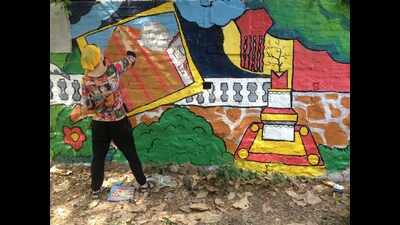
Most of the artists mention that the legal acceptance of art outside galleries in India is a prime reason for them to come back every now and then.
“It was euphoric. I painted as I sang along, and it was just incredible. I have never seen such a reaction anywhere else,” says Das.
He is one of the hundreds of international artists who fly into India from their respective hometowns often and travel the country, adding colours to the walls.

“The scene in India is magnetic. The people are so supportive. It’s a pleasure to see your audience engaging with you when you’re painting,” says 25-year-old Miles Toland from New Mexico, US. His engagement with people in a small village on the outskirts of Pune brings a smile to his face.
“They knew English just as much as I knew Hindi. We didn’t communicate verbally, but even then they brought me water, chai and made sure I was comfortable. It was overwhelming,” he says.
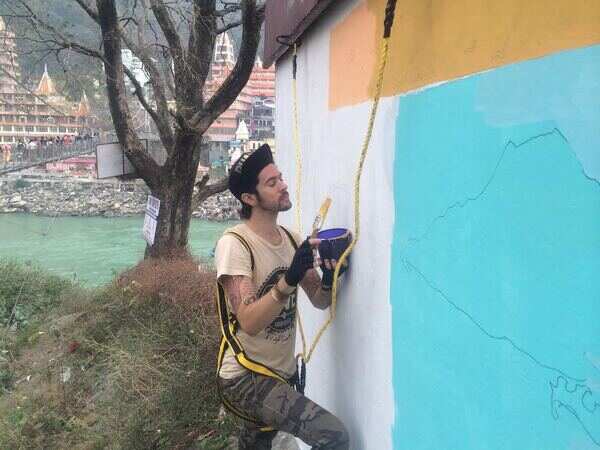
Elaborating on the reason for their love for Indian walls, most of the artists mention that the legal acceptance of art outside galleries in India is a prime reason for them to come back every now and then.
“Though New Mexico is culturally very rich, the scenario for wall art is extremely dull. Most of the work that I’ve done there is either illegal or has involved a lot of correspondence with the wall owners,” says Toland.
Das seconds Toland’s opinion as he says that cops in his hometown Ontario don’t support art and youth-centric activities, making it difficult for him, like many others, to paint.
Maria Krizh (31) says that she might have missed the surge of street art in her own country, Russia, but is more than happy that she made the most of her passion in India.
“It’s a happy place for artists like us. I worked on a wall in Khan Market, Delhi, along with famous Egyptian artist Mohamed Abla. It was just amazing,” she says.
The fact that authorities across cities are commissioning such work only strengthens India’s growing status as a canvas for one and all. When quizzed on the sudden spurt of commissioned works in the city, Neeraj Bharti, project director, NDMC, said, “We want to create a happy space and tell the residents that art and culture are an important part of any civilization. We want to promote creativity. We want to make sure there is a cultural connect in a smart city.”
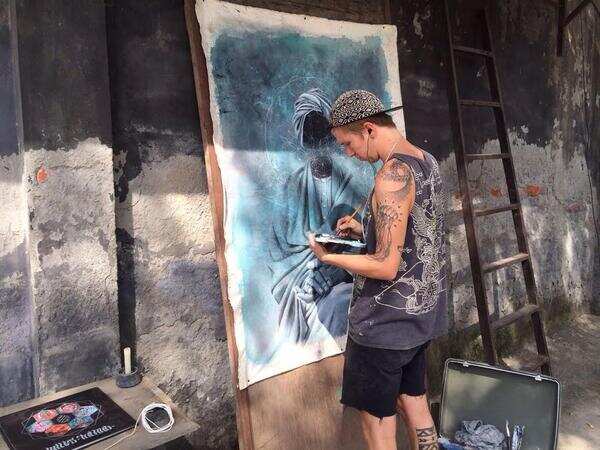
Ahmedabad Municipal Corporation, Shankar Market, Narela Train Station, Lok Nayak Building, Khan Market are a few notable works that have been commissioned by authorities.
The 6,080 sq ft mural of Mahatma Gandhi at the police headquarters in New Delhi by German graffiti artist Hendrik Beikirch, assisted by local artist Anpu, is another such example.
“Street art is not new to us. But the sudden and growing interest in it is fantastic and empowering. Many of my friends from other countries visit the country and just go about painting walls. The acceptance by people is extremely good,” says Anpu, a graffiti artist based out of Delhi.
Yogesh Saini from Delhi Street Art has been a strong force in bringing together a bevy of artists, domestic and international alike, to add colour to the walls.
“Government departments see it as an opportunity to have beautiful, clean walls, thus being in tandem with the ideology of Swachh Bharat. And for artists, it’s a way to pursue their passion in the best possible manner,” Saini adds.
If the legality was not reason enough for the artists to come and paint walls in the country, the ‘rawness’ of walls in India is only an added advantage.
“India has the most impressive walls. They’re textured, ancient, layered with moss, cracks and ageing paint. Combining these elements with street art is a kind of depth that one cannot find anywhere else,” says Das.
End of Article
FOLLOW US ON SOCIAL MEDIA





Hot Picks
TOP TRENDING
Trending Stories
In City
Entire Website
- Centre seeks review of SC's mineral royalty judgment
- 'At 2:30 in the night, Rohit Sharma texted me and asked...'
- Schools closed across various states till 16th September: Here’s why
- Live wire snaps, boy recalls science lesson, saves lives with sister
- Many parts of Chennai face power supply disruption due to fire at Manali substation
- Aadhaar card update: Do you have to compulsorily update details on your Aadhaar every 10 years?
- Kevin Spacey allegedly demands $100,000 to vacate Baltimore residence, new owner says actor tries to 'paint himself as victim’
- Who is Jared Isaacman? Billionaire who stepped out of SpaceX capsule for first private spacewalk
- NMC approves expansion: GMC to offer 200 MBBS seats and more PG seats in 2024-25
- Veteran CPM leader Sitaram Yechury passes away
- 'Fail to understand the great urgency to ...': What SC said while granting bail to Arvind Kejriwal
- 'Despite their efforts ... ': AAP says Kejriwal bail order strong message against BJP
- Why you should not be fooled by ‘20-year SIP crorepati’ dream
- 'Can't attend office': SC's bail conditions for Delhi CM Kejriwal
- 'Cops stood as mute spectators': Doctors write to President over RG Kar impasse
- India's Test wins ready to outnumber defeats: Where the trend changed
- Five things to keep in mind before betting on Bajaj Housing Finance
- Refund on iPhone 15 & 14: Apple's policy says conditions applied
- Haryana: It’s Bhupinder Singh Hooda way or the highway in Congress
- Shreyas Iyer bats wearing sunglasses, falls for duck

Popular Categories
Hot on the Web
Top Trends
Trending Topics
Alia BhattMalaika Arora Father DeathArbaaz KhanNatasa StankovicMr Bachchan OTT ReleaseNational Parks In IndiaSelena GomezGOAT CollectionVikas Sethi DeathMalayalam ProducersIndia's Best Dancer 4Simi GarewalDilli BabuIndian National ParksLaung BenefitsVikas SethiApple iPhone 16SpaceXAadhar Card Update By Sept 14Wordle Answer
Living and entertainment
Latest News
7. Hindi becomes officialSalman Khan surrounded by bodyguards as he arrives at Malaika Arora's mother's house to offer his condolences - WATCHJulie Chen to miss Big Brother live eviction for first time, taps Jerry O'Connell to hostBonedi baris hope for a peaceful start to PujoNIA raids pro-Khalistan preacher Amritpal Singh's relative's house in AmritsarA vision unfolds: How Levitation is crafting tomorrow’s enterprise solutionsTovino Thomas praises Prithviraj Sukumaran as director: "One of the brilliant directors I have ever worked with"Tragedy strikes at fundraiser: Mother of two dies after marshmallow-eating competitionMan shot near Delhi's Greater Kailash-I gym, gang war suspected8 animals that reproduce without matingHow a balanced pH helps maintain your skin’s youthful appearance'Cops stood as mute spectators': Protesting doctors write to President over RG Kar impasseStree 2 box office collection: Shraddha Kapoor and Rajkummar Rao starrer clocks Rs 539 croreISL-11 opener: Familiar foes back in businessFatal crash in Australia's Netherby claims life of ToddlerBiden to host fourth quad summit with PM Modi, Albanese, and Kishida in Delaware on September 21: White HouseSanthy Balachandran turns screenwriter for Kalyani Priyadarshan and Naslen starrerDivya Bansal explores themes of human resilience, love and positive transformation in debut poetry book
Copyright © 2024 Bennett, Coleman & Co. Ltd. All rights reserved. For reprint rights: Times Syndication Service